
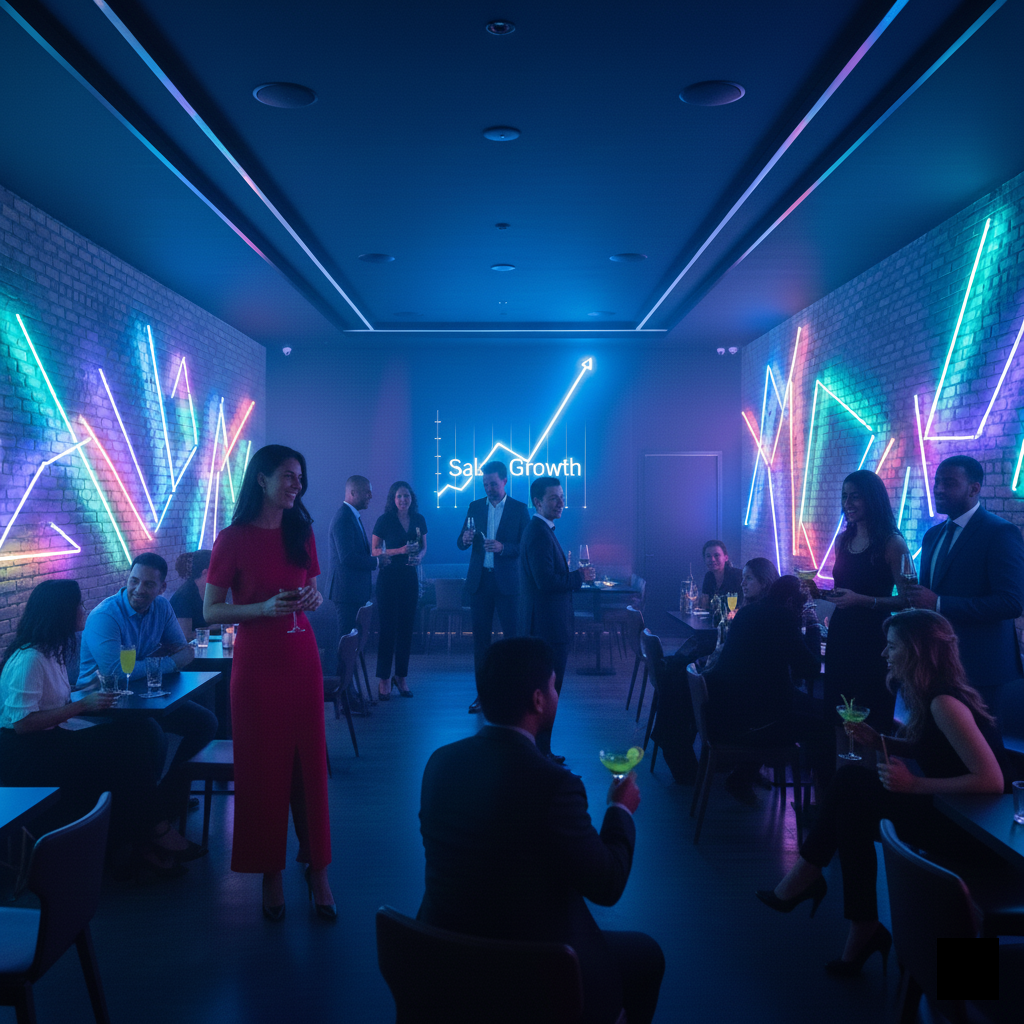
In the rapidly evolving hospitality landscape of 2026, the traditional restaurant/bar promoter—once defined by “body-counting” and flyers—is being replaced by the New-Era Promoter. This new model focuses on experiential marketing and immersive agency partnerships that prioritize brand storytelling over mere attendance.
For restaurant and bar owners, transitioning to this strategy is no longer optional; it is the key to creating a venue that is “viral by design” rather than by chance.
1. The Shift: From Body-Counting to Concept Execution
Traditional promoters were hired to fill a room, often regardless of whether those guests aligned with the brand’s long-term identity. The New-Age Promoter acts more like an Experiential Agency, focusing on:
- Immersive Concepts: Designing comprehensive event themes with custom decor and overall concept execution.
- Sensory Branding: Moving beyond just music to include tactile interactive props and visual storytelling that resonates long after the event ends.
- Emotional Engagement: Creating “movements” and branded cultures that turn audiences into engaged, loyal communities.
2. Strategic Implementation: How to Start Now
Restaurant owners should move away from individual freelancers and toward firms that specialize in Activation Portfolios.
Key Steps for Owners:
- Audit Your “Shareability”: Before hiring an agency, ensure your venue has “Instagrammable” scenes built for visual storytelling.
- Request Activation Data: When vetting partners, ask for “before-and-after” space transformations and hard engagement data (e.g., social media reach and repeat guest rates) rather than just a follower count.
- Incorporate “Pop-Up” Urgency: Use these agencies to create limited-time “street-to-venue” buzz, such as custom mobile activations or weekend-only themed takeovers.
3. Finding and Vetting Your Experiential Partner
You don’t need to be in a major hub to find high-impact partners. Whether you are looking for a local boutique firm or a national agency with deep food and beverage (F&B) expertise, the vetting process remains the same.
- Search for Specialization: Look for agencies with a “Hospitality” or “F&B” specific portfolio. Firms like RMNG or The Food Group are known for national-scale activations, while regional hubs like Northern California or the Bay Area host agencies like Hearst Bay Area that provide multi-touch marketing solutions.
- The Request for Proposal (RFP) Process: When reaching out, issue a clear RFP that defines your event objectives, target audience demographics, and budget guidelines.
- What to Ask For: specifically request their Activation Portfolio. This allows you to see their creative design capabilities and the tangible results (KPIs) they achieved for similar brands.
| Feature | Traditional Promoter | New-Era Experiential Agency |
| Primary Goal | Occupancy (Body Count) | Brand Engagement & Loyalty |
| Key Metric | Attendance Numbers | Social Reach & Content Quality |
| Asset Provided | Social Posts/Flyers | Immersive Decor & Themes |
| Strategy | Broad Casting | Targeted Branded Culture |
4. Decoding Payment Structures: Are You Being Charged Correctly?
Payment models vary significantly between experiential agencies. It is critical to ensure your contract aligns with your specific business goals—whether that is guaranteed attendance or long-term revenue growth.
- Flat or Fixed Fees: Best for one-off, complex projects with a defined scope. You know the cost upfront, but ensure the “kill fee” and scope-creep terms are clearly documented.
- Monthly Retainers: Ideal for ongoing activations and multi-event calendars. This model stabilizes cash flow for both parties but requires a minimum commitment (often 6–12 months).
- Performance-Based (Per Head Count / Sales %): This model ties agency compensation directly to results, such as a fee for every guest through the door or a percentage of the night’s gross sales.
- The “Per Head” Watch: Common for “day-of” coordination or event-specific traffic.
- The “% of Sales” Catch: Agencies typically only accept this if they have direct influence over your sales process or CRM to verify results.
- Percentage of Event Budget: Some agencies charge a commission (typically 15–20%) on top of the total event spend.
| Structure | Best For… | Key Advantage |
| Fixed Fee | Complex, one-time themed takeovers. | Cost certainty upfront. |
| Retainer | Consistent year-round promotional support. | Predictable budgeting. |
| Performance | Driving high-volume traffic for specific events. | Shared risk/reward with the agency. |
| % of Sales | Long-term growth partnerships. | Direct alignment with your bottom line. |
5. The “Inverted Funnel” Advantage
By utilizing these agencies, you shift to an Inverted Marketing Funnel. Instead of spending heavily to attract a broad, generic audience, you focus on providing a “top-shelf” experience for existing guests. These guests then become your primary promoters through organic social sharing, creating a more sustainable and high-margin growth model.
The Next Move: From Body Counts to Brand Loyalty
The era of the “club promoter” is fading, replaced by the precision of Experiential Marketing. In 2026, your venue’s success won’t be measured by the line at the door, but by the depth of the engagement inside it. Transitioning to a concept-first model is the most effective way to protect your margins and build a brand that resonates in the modern hospitality market.
Ready to Serve Your Brand’s New Era?
If you are a restaurant or bar owner ready to move beyond traditional promotion and into immersive, high-impact activations, let’s ensure your strategy is as sound as your concept.
- Schedule a Strategy Consultation: Let’s sit down to evaluate your 2026 promotional calendar and determine which experiential strategy aligns with your brand identity and financial goals.
- Activation Budgeting: I can help you architect a promotional budget that prioritizes high-impact buzz over generic advertising, ensuring every dollar spent drives measurable engagement.
- Request for Proposal (RFP) Assistance: Not sure how to vet these new-age firms? I can draft a formal RFP to ensure you get the data, portfolios, and “before-and-after” transformations needed to make an informed decision.
Don’t just fill your tables—build a legacy that keeps them coming back.

About the Author
Michael R. Arrache, CPA & Realtor®
As a Certified Public Accountant (CPA), Enrolled Agent (EA), and licensed Realtor®, Michael is a tax and real estate strategist who specializes in the intersection of business ownership and real estate investment. His firm, Arrache Private Client, provides high-level Tax Planning, CFO consulting, and Real Estate strategies for real estate and business owners looking to increase profits and grow their wealth.
With over 15 years of experience, Michael’s mission is to move clients from passive earners to strategic principals in their own financial lives. These publications serve as a guide through the complexities of business and real estate, offering the tailored solutions and strategic oversight needed to secure a multi-generational legacy.