
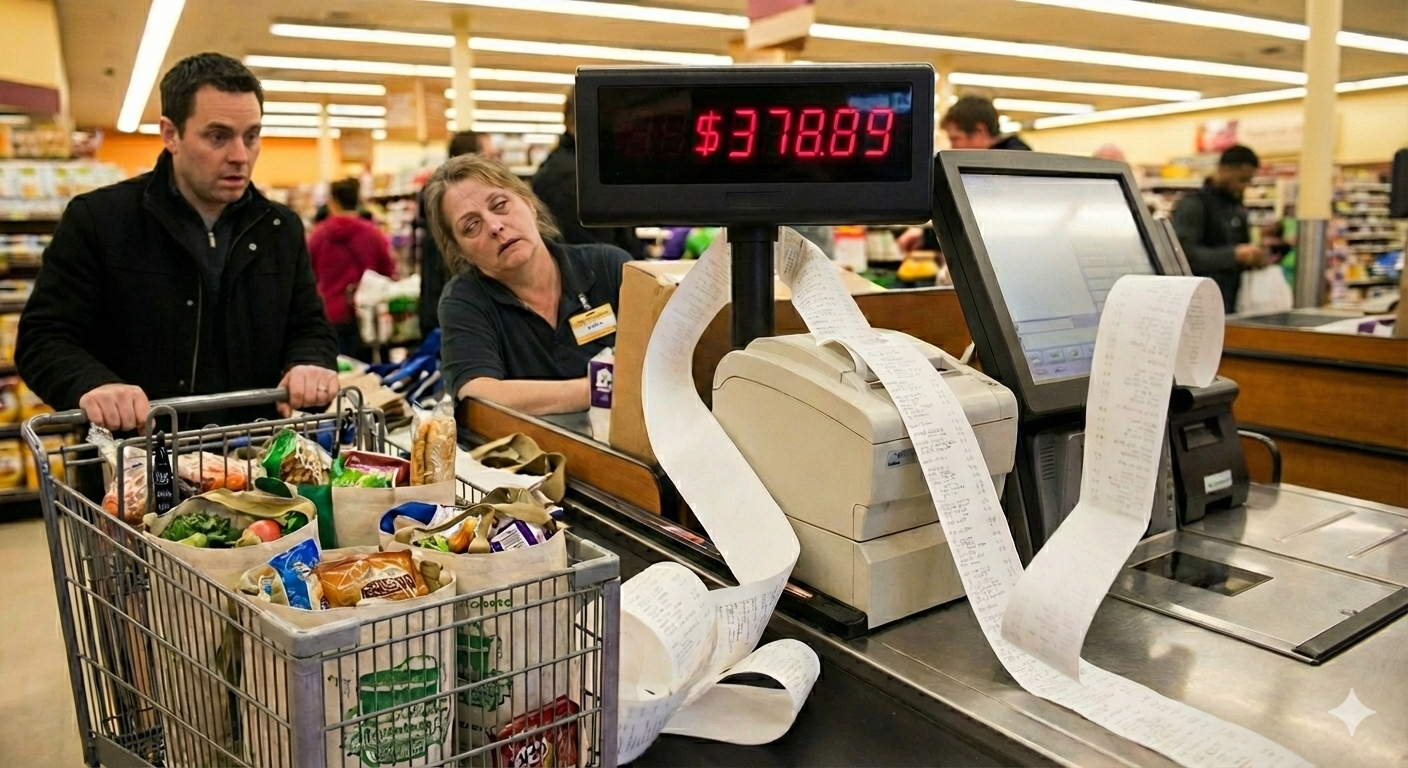
The air is thick with economic uncertainty. Headlines scream about layoffs at major corporations, once-bustling retail locations stand empty, and the cost of everyday living continues its relentless climb. For many, the signs feel eerily familiar – a disquieting echo of past downturns. Are we truly on the brink of another significant recession, and if so, how can individuals and business owners strategically prepare?
This article will break down the current economic landscape, drawing parallels to the last 100 years of recession cycles, and offer actionable strategies for wealth preservation and proactive planning.
The Canaries in the Coal Mine: Where We Stand Today
The current economic situation presents a confluence of troubling indicators, suggesting that the consumer – the engine of our economy – is under immense stress.
- The “Three Pillars” of Consumer Health Are Cracking:
- Depleted Savings: The personal savings rate has plummeted to near historic lows, leaving households vulnerable to any unexpected financial shock.
- Soaring Credit Card Debt & Delinquencies: Total outstanding credit card balances are at all-time highs, coupled with interest rates comfortably above $20\%$. The rise in seriously delinquent accounts (90+ days late) signals severe financial strain.
- Rising Unemployment: The steady upward trend in the unemployment rate is a classic precursor to recessionary periods, signifying a broader weakening of the labor market.
- Luxury First, Then Everything Else: Major brands like Harley-Davidson are seeing sales slump. This is a classic recessionary signal: discretionary “luxury” items are the first to be cut when uncertainty bites.
- The “Trade Down” Effect: The struggles of middle-tier establishments like Denny’s point to consumers “trading down” – opting for cheaper alternatives or simply eating out less frequently.
- The Cardboard Box Indicator: The slowdown in shipping volume, exemplified by challenges at UPS, is often called the “cardboard box indicator,” and signals reduced business-to-business and business-to-consumer activity across the board.
These indicators point to consumers running out of savings, leaning heavily on expensive debt, and facing an increasingly uncertain job market.
Historical Recessions: Lessons from the Last 100 Years
Understanding where we’ve been can offer clues about where we might be headed. Each recession has its unique triggers, but common themes emerge.
The Great Depression (1929-1939)
- Trigger: Stock market crash, banking panics, monetary contraction.
- Comparison: The scale is unlikely to be repeated thanks to modern banking regulations. However, the current decline in discretionary spending echoes the initial, widespread belt-tightening of the 1930s.
Post-War Recession (1945)
- Trigger: Sudden demobilization and massive cuts in wartime government spending.
- Comparison: This was a unique “reconversion” recession. Our current situation is driven by a different kind of post-stimulus adjustment – unwinding the excesses of COVID-era spending and low interest rates.
1970s Stagflation Recessions (1973-75 & 1980-82)
- Trigger: Oil shocks, high inflation, and the Federal Reserve aggressively raising interest rates.
- Comparison: This is the most relevant parallel. We currently face persistent inflation and aggressive interest rate hikes. This combination of slowing growth and sticky inflation (“Stagflation Lite”) is a major concern today.
Early 1990s Recession (1990-91)
- Trigger: Savings & Loan crisis and accumulation of debt.
- Comparison: Similarities include corporate debt accumulation, but today’s consumer debt burden and inflation are more pronounced.
Dot-Com Bust (2001)
- Trigger: Bursting of the technology stock bubble and over-investment in tech.
- Comparison: The current tech industry layoffs echo the 2001 correction. However, today’s consumer is less financially secure due to higher inflation and depleted savings.
The Great Recession (2007-2009)
- Trigger: Subprime mortgage crisis and housing market collapse.
- Comparison: A direct repeat is unlikely due to better-capitalized banks. However, the impact on consumer confidence, job losses, and credit market tightening could feel similar for many households.
Navigating the Future: Prediction and Proactive Strategies
The convergence of depleted savings, rising debt costs, slowing job growth, and retreating discretionary spending strongly suggests that we are heading into a significant economic slowdown. It may manifest as a “rolling recession,” where different sectors contract sequentially.
Prediction:
Expect continued volatility, rising unemployment reaching the $5$-$6\%$ range, and persistent inflation above the Fed’s target. This combination will continue to squeeze household budgets, leading to further reductions in consumer spending.
How Arrache Private Client Can Help You Plan Ahead:
In uncertain times, strategic planning is essential for preserving and growing wealth. At Arrache Private Client, led by Michael Arrache, CPA & Realtor®, we specialize in developing robust financial strategies tailored to economic shifts.
- For Real Estate Owners:
- Tax Strategy Optimization: We can help you explore strategies like cost segregation to accelerate depreciation deductions and 1031 exchanges for tax-deferred reinvestment. Proactive tax planning can significantly improve cash flow and net returns during a downturn.
- Portfolio Stress Testing: We provide analysis to identify vulnerabilities and opportunities for strategic acquisitions when market prices dip.
- For Business Owners:
- Cash Flow Management & Forecasting: Recessions are cash flow killers. We implement rigorous cash flow forecasting and establish stronger liquidity positions to weather reduced demand.
- Strategic Tax Planning for Resilience: We help you evaluate entity structures for tax efficiency, optimize executive compensation plans, and explore tax credits that can offset declining revenues.
The current economic headwinds are real, but they don’t have to sink your financial future. By understanding the warning signs and implementing proactive, strategic planning, you can position yourself to not only survive but potentially thrive through the challenges ahead.
Contact Michael Arrache at Michael@ArrachePC.com for a personalized consultation to review your current financial position and develop a tailored strategy for navigating the evolving economic landscape.

About the Author
Michael R. Arrache, CPA, EA, DRE
As a Certified Public Accountant (CPA), Enrolled Agent (EA), and licensed Realtor®, I am a tax expert who works closely with small business owners and real estate investors. My firm, Arrache Private Client, provides a range of specialized tax strategy, wealth preservation, and legacy planning for for real estate and business owners. With over 15 years of experience, my mission is to help clients achieve their financial and business goals by providing strategic advice and tailored solutions. I write these articles to serve as a starting point to guide you through the business or real estate process, and I am committed to providing the strategic guidance you need to help preserve and grow your wealth.